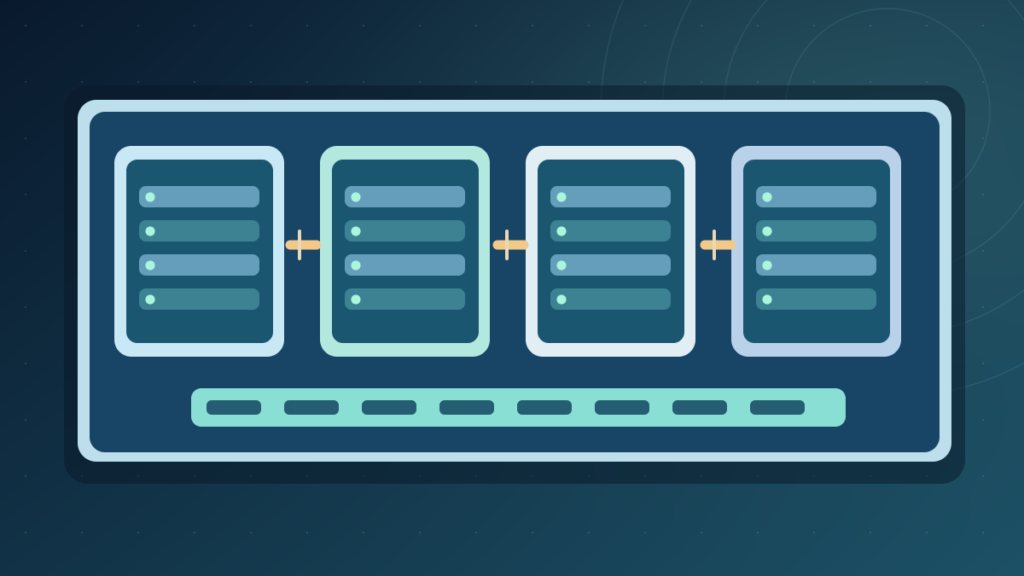

Network segmentation separates systems into zones and enforces rules about which connections may cross their boundaries. VLANs and subnets help organize the network, while firewalls and workload policies determine actual access. Effective segmentation is tested rather than merely diagrammed.
This guide explains network zones, zero trust, microsegmentation, policy examples and validation steps.
What Network Segmentation Is And Why It Matters
Network segmentation divides a network into zones and sets policies that govern traffic between them. Instead of giving every endpoint unrestricted access to all servers, administrators create groups based on function, risk and legitimate communication. An employee laptop, payment database, guest phone and infrastructure management console should not automatically share the same network permissions.
The goal is to reduce unnecessary connectivity, limit some lateral movement after compromise and make network behavior easier to understand. A school could isolate student devices from administrative systems. A business could restrict direct access to its databases. A home router could keep visitors away from household file shares while still permitting internet access.
Cisco’s segmentation guide describes macro- and microsegmentation. Microsoft’s network security guidance explains why restrictions should be applied at appropriate boundaries. These sources make one point clear: a diagram with several labeled networks is not sufficient proof that isolation works.
A properly designed network still permits needed business applications, DNS, monitoring and authorized support. Security controls that break every workflow will eventually be bypassed or removed. The design must balance justified access with reliable operation.
Our computer network fundamentals article covers routers and communication layers. This guide addresses the additional challenge of separating traffic according to security intent.
VLANs, Subnets And Firewalls Have Different Roles
A VLAN creates a logical layer-two broadcast domain on supported network equipment. An IP subnet groups network-layer addresses. A router can forward traffic between subnets, while a firewall or access-control policy decides which flows are permitted. These technologies often work together, but none should be mistaken for all the others.
For example, an office could assign visitor Wi-Fi to one VLAN and staff computers to another. If its router freely forwards traffic between them, the network still permits access that the design may have intended to prevent. The true security boundary is the enforced policy, not the VLAN label.
Managed Devices
Internet Only
Approved Applications
Restricted Operators
Firewall And Routing Policies Determine The Permitted Zone-to-Zone Paths
Physical separation using distinct switches or cables can be appropriate for higher-risk systems. It still requires correct administration, cabling and authentication. Logical controls may be efficient where equipment and operations can enforce them reliably.
An implementation plan should document VLAN IDs, subnet ranges, routing points, firewall controls and owners. Without those details, future administrators may unintentionally bypass a boundary.
Read LAN basics, routers and switches for the underlying roles.
Macrosegmentation And Microsegmentation
Macrosegmentation separates broad groups such as guest, staff, production servers and management systems. A central or distributed firewall can control traffic between these larger zones. It is often a practical first step because one set of policies can eliminate many unnecessary paths without requiring every application to have unique rules.
Microsegmentation introduces finer-grained restrictions at the workload or host level. A database might permit only one designated application service rather than every machine inside its subnet. Host firewalls, virtualization platforms and cloud policies can enforce this model, depending on the environment.
| Method | Enforcement Scope | Illustration |
|---|---|---|
| Macrosegmentation | Zone Boundaries | Guest To Office Denied |
| Microsegmentation | Workload Or Host | App Tier To Database Only |
| Physical Isolation | Dedicated Infrastructure | Specialized Control Network |
NIST’s enterprise network guidance discusses microsegmentation among contemporary network security techniques. It can reduce lateral reachability but does not remove the need for application authentication or operations.
The more granular a policy, the more important accurate application dependency information becomes. Rules that inadvertently block authentication, backup agents or monitoring can create outages. Teams should avoid solving these failures by permanently permitting everything.
Choose the level of segmentation that can be understood, tested and maintained. More rule objects do not necessarily mean better security.
North-South Traffic And East-West Traffic
North-south communication enters or leaves a defined network environment, such as an internet user accessing a public website. East-west traffic moves among systems inside it, such as an application connecting to its database. These labels help administrators reason about traffic paths, but their precise boundary depends on what environment is being discussed.
A perimeter firewall may control incoming internet connections while internal systems remain broadly reachable. An attacker who compromises one workstation can then seek other targets. Segmentation can reduce that reachability by restricting internal paths that are not necessary for work.
Microsoft’s security design guidance recommends applying controls at available east-west and north-south boundaries. The correct policy allows necessary services and denies unrelated access, rather than treating every internal packet as inherently malicious.
Flow logs can help identify unexpected traffic. A printer attempting to contact a database management endpoint may be worth investigating if the network design gives it no legitimate need. The event alone is not proof of malicious intent; misconfiguration and application changes can also create unusual paths.
Monitoring should balance usefulness with privacy and retention requirements. A dashboard with enormous amounts of unreviewed data may be less helpful than a smaller set of meaningful alerts.
See what a firewall does for the mechanism that can enforce many of these boundaries.
Zero Trust Is A Broader Security Architecture
Zero trust is not simply another name for VLAN isolation. NIST SP 800-207 describes a security model that does not automatically trust a resource or user based on network location. Access to important services should be explicitly authorized according to the applicable identity and policy.
A payroll application on a restricted subnet still needs user authentication and role-based permissions. If every machine in that subnet can edit confidential records without authentication, the resource remains dangerously exposed even though outsiders cannot route directly to it.
Network segmentation supports zero trust by narrowing unnecessary communication paths and placing controls close to workloads. But it does not itself verify a user’s identity, evaluate device health or grant application permissions. Those are separate functions that may complement the network policy.
Conversely, identity-based controls do not make network restrictions irrelevant. A device that cannot directly connect to an unnecessary service has fewer available pathways for misuse. Layered controls reduce reliance on one mechanism working perfectly.
Some products claim to deliver zero trust through one switch feature or firewall option. Evaluate what the product actually enforces and how decisions are logged rather than relying on the marketing phrase.
A credible architecture combines least privilege, authenticated resource access, network policies, system updates and incident response.
Home Guest Wi-Fi And IoT Network Isolation
Many home routers offer guest Wi-Fi intended to provide visitors with internet access while limiting access to private devices. This is a useful everyday example of segmentation when the product enforces the intended restrictions. A different network name by itself does not guarantee isolation.
A household may also want smart cameras and televisions on a separate network. Some devices need only internet access, while others use local discovery or casting. A secure design may allow narrowly defined exceptions rather than giving every smart device access to personal computers.
Our access point guide explains radio connectivity. The access point may place traffic into a VLAN, but another router or firewall often determines which destinations it can reach.
Verify the result with devices you own. Connect a harmless test service to the private network, confirm that a normal authorized device can use it, then check that a guest device cannot. Also confirm that the guest still has expected internet access.
Do not test third-party networks without permission or disable the household’s entire firewall while experimenting. Consumer router features vary, so follow the manufacturer documentation for the exact model and firmware.
Keep the design simple enough that household members can maintain it. A complicated configuration that nobody understands may fail silently after an equipment replacement.
Create A Real Traffic Matrix Before Changing Rules
A traffic matrix records which source zones need to reach which destinations, through which protocols, for what legitimate purpose. Entries can also include the application owner, approved users, expected authentication and policy expiration. The matrix turns abstract isolation goals into testable access requirements.
For example, staff clients might need HTTPS access to an application. The application might need a database connection on its documented port. Ordinary staff computers may not need direct database administration access. The matrix should record these different permissions explicitly.
Include support dependencies such as DNS, directory services, monitoring, software updates and backups. Missing one essential flow can make a successful segmentation project look like a widespread application failure. Application owners should review the proposed matrix before restrictive enforcement.
Avoid copying port lists from unrelated systems. Versions, operating systems and service configurations can change requirements. Use current vendor documentation and authorized traffic observations to establish what is needed.
Assign a review or expiry date to temporary exceptions. A broad rule opened during a migration should not remain after its original justification disappears. Maintaining a clean rule set is an ongoing security task.
The matrix also helps independent validation. Each entry can become an expected allowed test, while important denied paths become negative tests. This is more meaningful than counting configured VLANs.
Cloud Networks, VMs And Container Workloads
Cloud environments offer virtual networks, subnets, security groups and network policies, but the exact semantics vary by provider. A private subnet is not automatically an authenticated application boundary, and a public resource is not necessarily reachable if routing and firewall controls deny access.
Virtual machines use virtual network adapters and switches that can connect them to chosen network domains. Containers may have dynamic network identities and policies that move with workloads. Operators should document the security boundary at the level actually used by the service.
Microsoft’s zero-trust network guidance discusses segmentation across cloud, on-premises and hybrid deployments. The objective is to restrict unnecessary paths as applications scale and migrate.
An application in one cloud service may need an authorized connection to a managed database in another. Its identity and service-specific permissions still matter, even when network reachability is tightly controlled.
See virtual machines and data centers for the infrastructure context. Virtualized networks still rely on physical hosts, routers and operational processes.
Use change-reviewed policy definitions where appropriate, preserve rollback and detect configuration drift after deployments. A secure design must survive normal changes instead of working only on the day it was created.
Avoid Misconfigured Trunks, Rules And Exceptions
One common failure is to create several VLANs but permit all routed traffic between them. The network looks divided while sensitive services remain directly accessible. A second error is placing the wrong switch port in a VLAN, unintentionally connecting a machine to a less restricted zone.
A third problem is rule ordering. A broad allow rule can override or bypass more specific restrictions depending on the firewall platform and policy order. A fourth is permitting all traffic temporarily to restore one application and then forgetting to remove the exception.
A fifth issue is blocking legitimate dependencies, including DNS, authentication, monitoring and backup services. This can lead frustrated operators to dismantle the segmentation rather than identify the narrow missing permission.
Every rule should have a clear business purpose, enforcement point and owner. Network change reviews should verify both intended allowances and denials, with an approved rollback procedure.
Hardware and cloud providers use distinct syntax. Do not copy commands for an unrelated switch or firewall model into a production environment. A wrong trunk or policy change can disconnect entire departments.
The final outcome is measured behavior. A design is not secure merely because its configuration screen contains several colorful zones.
Test Authorized And Denied Network Flows
A practical test plan includes positive and negative requirements. A staff computer should reach its approved internal application. A guest phone should reach permitted internet services but not private management resources. A database should accept designated application connections and reject unnecessary direct access.
Tests must use systems you control or have express permission to inspect. Record the source zone, destination, protocol, timestamp and result. Compare them with the traffic matrix instead of guessing what the network should do.
Verify that the right firewall or host policy caused a denial. An application that is simply not running can look unreachable even without a correct security boundary. An authenticated application rejecting a user is also different from the network blocking packets.
Log the relevant policy decision where the platform supports it. Retain evidence according to organizational privacy and security rules. Excessively detailed traffic collection without a purpose may introduce unnecessary risk.
Rerun representative tests after router changes, cloud migration or application upgrades. The original boundary can change even while the VLAN labels remain the same.
A complete test confirms that authorized work functions and prohibited routes are actually restricted. One successful blocked connection does not establish overall security.
Five Worked Segmentation Policy Scenarios
Scenario one concerns a small office with staff laptops and a guest Wi-Fi network. The desired policy lets guests browse the internet but not open staff file shares. The test should verify both outcomes using authorized devices. If guests can access shares, inspect routing and access policy rather than changing their browser passwords.
Scenario two concerns a web application and its database. The application needs a narrowly defined database connection, but ordinary employee workstations do not. The traffic matrix should name the authorized application service and protocol. A database password is still required; network restrictions alone do not authenticate the application.
Scenario three concerns printers. Staff may need to send print jobs, while printers may not need direct access to sensitive management systems. The design should accommodate documented print and discovery behavior without allowing every device to initiate arbitrary connections.
Scenario four concerns administrator access. A separate management zone limits access to infrastructure consoles. Approved administrators must retain an emergency recovery route, while ordinary guest and employee clients should not reach sensitive interfaces without authorization.
Scenario five concerns cloud development workloads. A test environment should not directly access production databases unless an approved business process requires it. Network restrictions should complement separate credentials and cloud resource permissions.
These scenarios illustrate how a security policy starts with application needs. They are not exact router command recipes and should not be deployed without the target system’s documentation and change approval.
Incident Response, Logging And Ongoing Review
After an incident, segmentation can help responders determine which destinations were reachable from a compromised endpoint. Flow logs and firewall events may reveal attempts to cross defined boundaries. However, a permitted application path can still be abused, and logs may be incomplete, so conclusions should not be overstated.
Keep a current inventory of segments, owners and critical services. Remove outdated rules, particularly temporary broad permissions left from upgrades or troubleshooting. Confirm that new applications are assigned to the intended zones and monitored appropriately.
Access review matters as much as network policy. An administrator who leaves the organization should not retain management credentials simply because the management network is segregated. Identity and network controls serve different purposes.
Back up device configurations through approved procedures and test restoration of important networking equipment. A segmentation rollout that cannot be reversed after a mistake may create substantial operational risk.
Review security exceptions periodically with application owners. A rule can remain technically functional while its original business purpose has disappeared.
The objective is an understandable, maintainable boundary that reduces unnecessary access and improves visibility, not a large collection of rules that nobody can audit.
Final Implementation And Verification Checklist
Begin by identifying assets, applications, data sensitivity and owners. Group resources by risk and genuine communication requirements, then choose appropriate physical or logical boundaries. Document subnets, VLANs, routes and enforcement points without placing secrets in general design documents.
Write a traffic matrix defining required flows and explicitly prohibited paths. Review with the teams responsible for the services. Test the configuration in a pilot where possible and preserve a known-good rollback.
Apply narrow firewall and workload policies. Verify that legitimate tasks continue working and that unauthorized flows are blocked. Review logs and adjust documented exceptions rather than using permanent allow-all rules.
Keep strong authentication, application updates and tested backups in place. A perfectly configured network boundary cannot repair a vulnerable application or compromised privileged account.
Monitor change, assign owners and revisit the segmentation after major equipment or service updates. A control that is not maintained may gradually lose the protection it was designed to provide.
Network segmentation is successful when the real communication behavior matches clearly documented and authorized requirements. That evidence matters more than a marketing claim or the number of VLANs in the design.
Technical QA: Validate Policy With Evidence
For one controlled test, record the source device’s assigned zone and IP configuration, its expected gateway and the destination’s permitted service. Verify that the endpoint application is actually running. Then observe whether a connection succeeds or fails according to the documented matrix. A failed network connection and an application login failure are different outcomes, and their remedies should not be confused.
For another test, check a permitted management connection from an authorized administrator and a denied attempt from a guest test device. Use harmless service requests and approved accounts. The test should preserve normal business operations and avoid scanning third-party networks. If a supposedly denied guest connection succeeds, identify which firewall or route allows it before changing unrelated devices.
Compare the result with firewall event logs and host-based controls. Some networks route traffic through a second security device, while others enforce policy close to the workload. A log on the wrong gateway might show nothing even when another control made the decision. Record the actual enforcement point for future troubleshooting.
When changing configuration, update the traffic matrix and rerun the affected tests. If the new restriction interrupts a required application, roll back safely or add the smallest justified exception. Avoid making all zones mutually accessible to solve one unknown dependency. Periodic retesting helps identify policy drift after major network or application changes.
Frequently Asked Questions
What Is Network Segmentation?
It divides a network into zones and controls communications between them.
Does A VLAN Automatically Secure The Network?
No. Appropriate routing and traffic policies must enforce the intended isolation.
What Is Microsegmentation?
Fine-grained access rules around individual hosts, services or workloads.
Does Segmentation Stop Every Cyberattack?
No. It reduces some access paths but still needs authentication, patching and monitoring.
What Is East-West Traffic?
Communication among systems inside a defined network environment.
Is Guest Wi-Fi A Form Of Segmentation?
Yes, when its actual policy prevents unauthorized access to private resources.
Is Zero Trust The Same As Segmentation?
No. Zero trust emphasizes explicit authorization rather than trusting network location alone.
How Do I Test Segmentation?
Compare authorized allowed and denied flows with a documented traffic matrix.


